
Why Precision Matters When Building Custom Cabinets from Scratch
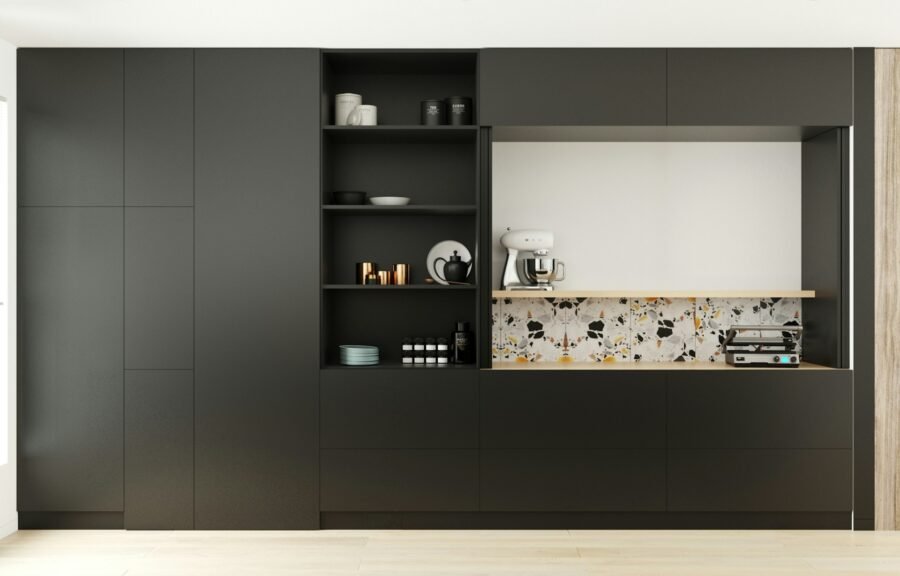
We’ve all been to home shows and various cabinet showrooms where so much of what we select for our cabinets focuses on color, style, and whether the doors look nice with hinges. That’s understandable – it’s the part you’ll see every day, but what’s vastly understated is that the precision of how these components are made means they’ll either work beautifully for 20 years or they’ll fall apart in three.
It’s not the wood species, the finish or any other determining factor, more than likely. It’s whether the stock was cut evenly, edge-glued accurately, bored correctly, and assembled with actual measurement. When creating custom cabinets from scratch, however, everything comes down to the precision of how you do it. If you don’t do it right, and precise, the project does not come together as planned.
Why It Matters More Than You Think
You’ll notice when a cabinet door is a sixteenth of an inch off. Perhaps not right away, but slowly but surely, gaps will not be even, one door will hang slightly proud to another, and the hardware won’t align quite right. These aren’t cosmetic issues; they’re signs that the frame was built with inaccuracy, and that’s worse than you think.
The problem is small mistakes manifest as larger ones compounded over time. For example, a cabinet frame that’s no longer square renders doors that don’t hang correctly. A drawer box that’s not a perfect rectangle will bind on one side, or leave a gap on another. A shelf that’s cut a quarter-inch short on one side means it won’t hold weight across its span, but to top it off, it may fall into the cabinet because there was no support in the first place.
Cabinet makers know this, professionals that make them pay attention to detail for a reason, they’re not nitpicking their measurements because they want to be annoying; they value the construction principles that make everything else in their industry works or makes for a nightmare full of adjustments.
What Happens Before Assembly?
You can see custom work come together by fabricating similar products and getting wildly different results and there’s a reason why; fabrication is what happens before assembly begins. It’s not what happens after which means this bears all significance in details like
Cut quality
Edge banding
Drilling for hardware
Joint considerations
The fabrication quality determines how well everything else can align. Are they even? Are they flush? If they aren’t from the get-go, no assembly is going to correct it.
In modern days especially, CNC technology changed much of what’s possible. Compounded digital cutting eliminates human error as is expected within traditional methods; when companies like Lovech utilize equipment to fabricate components of cabinets, they yield tolerances that human effort cannot supply, which means parts that actually join correctly, mounting points that exist without gaps, and levels that render no shim requirement for endless adjustment.
But it’s not just the equipment that matters, it’s the setup; CNCs that are improperly calibrated or cutting processes that do not take into account how materials change can still yield garbage results. This is where experience and attention trump assembling mediocre cabinets from less-than-ideal customized parts.
What Happens Without This Precision?
You start to notice patterns of poorly constructed cabinets after entering enough homes with unfinished products. Doors don’t close flush. Drawers require effort to open or stay shut halfway. Gaps are twice as wide in one area than another because end grains are uneven at best. Shelves bow from normal weight distribution. Hinges loosen because someone drilled the mounting holes, but not quite enough.
By day two of installation, these problems do not present themselves; instead, they reveal themselves over time under usage patterns. A door that’s misaligned wears its hinges unevenly over time. A drawer box binds on one side eventually destroys its slide because that additional wear was never factored into its construction. Wood that wasn’t cut evenly now splits because expansion and contraction of humidity deterred all edges from staying flush, when they never were to begin with.
The saddest part? After-the-fact adjustments are painstaking; you can realign door hinges after they’re misaligned, and you can plane edges down after they’re too proud, but you can’t regain your time or resources for no ROI when your inaccurately measured components were built haphazardly or without care.
What Are the Details That Matter?
It’s cutting accuracy first and foremost; edge-glued parts must be cut to specification based upon design plans and stock widths, this means edges must be clean and corners squared, in almost basic fashion, yet for production tolerances achieved across thousands or millions of pieces daily.
Next up is edge banding application; most people don’t realize that slight errors here create tiny ledges that catch debris which eventually results in peeling, adhesives must be level along the edge and temperature regulated while trimming needs to encompass the use of a router that maintains a clean transition between the banding and panel surface.
Before assembly even takes place, joint preparation must exist, for instance, dado cuts mean widths and depths must be determined accurately, dowel holes need to be punched through positioned areas so joints pull tightly together; any slop in these connections compromises structural integrity which leads to cabinets racking over time and sagging panels due to inadequately milled components.
Why This Matters for Your Questions
Ultimately, when you’re going through your custom cabinet planning process, the manufacturing tolerances should rank nearly highest on your priority list, something that looks good but has no tolerance will disappoint you, and something simple but seamlessly manufactured will endure over time.
You don’t have to understand the process intimately, but instead ask questions regarding cutting process, tolerances fabricators work within, equipment utilized for stability and production quality compared to final touches in line with quality control.
Companies who care about tolerances will boast about their machinery; they know it’s a powerhouse differentiator, they know their value. If a fabricator cannot express why they’re great at achieving this level for accuracy, that’s an important question mark against them.
What Should You Expect When That’s Not There?
It’s higher quality, it is what it is, the upfront cost exists; precision equipment has tight tolerances; trained operators using high-tech machinery demand wages; additional job time for quality control all gets factored but precision pays off equity over lifespan.
You’re not readjusting doors; you’re not replacing hardware; you’re not fielding inquiries from frustrated customers receiving your product with no limitations between consumer use and commercial application; existing cabinets simply work year after year, as intended.
That reliability holds weight; it means less maintenance if any, is your cabinet convincing to your buyers? The market knows, they’re well versed in quality and lack thereof, and if your cabinets remain strong post install, and stand the test of time, they’re going to yield value down the road.
The difference between cabinets adequately built versus precisely measured may not strike a chord in photos or quite frankly, at first glance, but after living with either one for a substantial amount of time through good times and bad, minor inconveniences compound infinitely when they’re forced items to deal with.
When investing in custom work, the precision creates ROI even if it costs a little more money at first.