
Flags Of Caribbean Countries
Caribbean flags convey compelling stories through their colors and symbols. The region encompasses 239,681 km² (92,541 sq mi) with over 44 million inhabitants, and each flag embodies a unique national identity while preserving cultural heritage. The Jamaican flag’s design stands as a powerful example – its black triangles symbolize the overcoming of past and future hardships, and the green triangles represent hope and agriculture.
These flags showcase the vibrant diversity of Caribbean island nations. Spanish (64%), French (25%), and English (14%) serve as predominant languages, and each nation’s flag incorporates distinct historical influences and cultural elements. The remarkable variety of Caribbean island flags reveals the core values that each nation cherishes. This piece examines the hidden meanings, colonial roots, and cultural significance of these powerful national symbols that shape Caribbean identity.
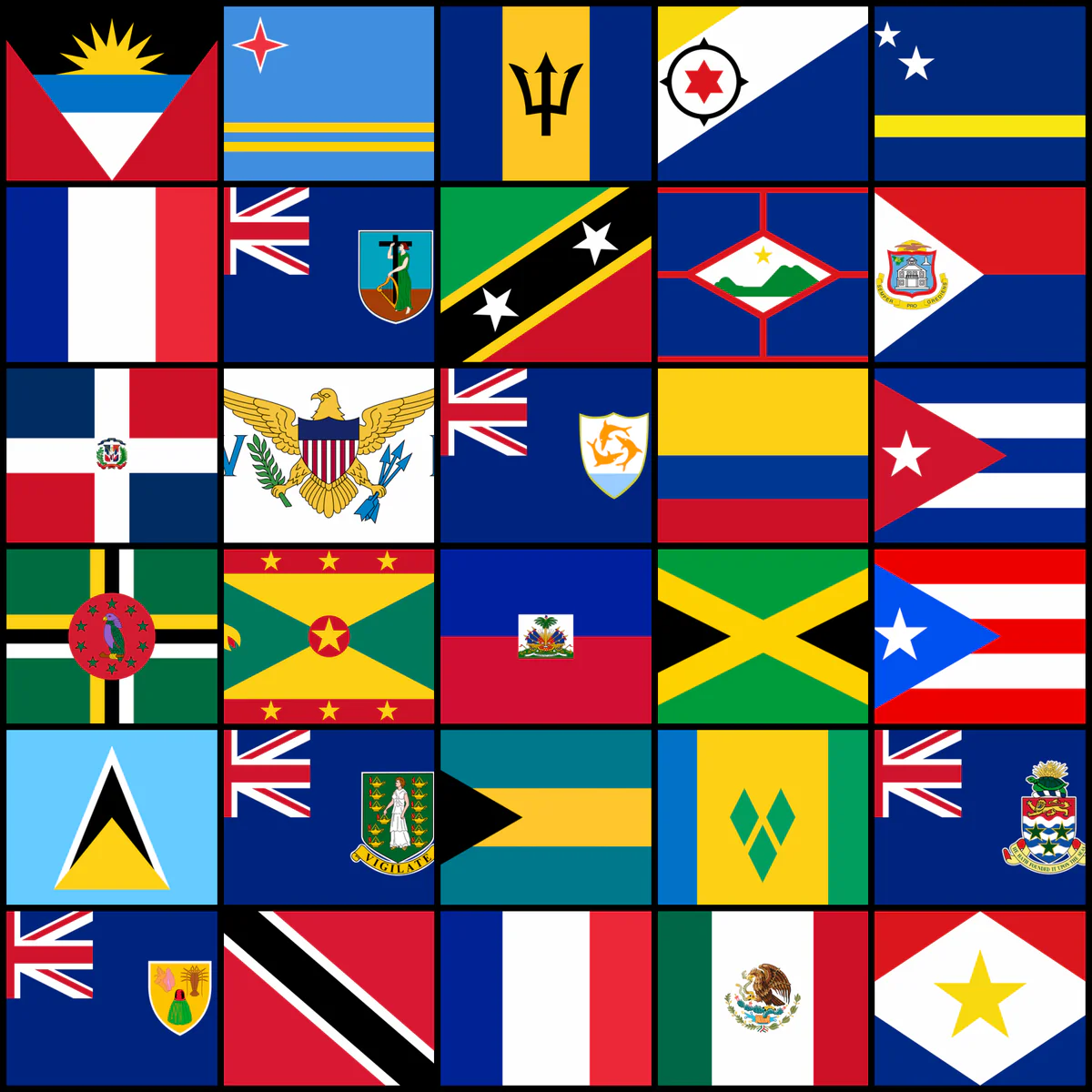
The Caribbean Identity Through Flags
The Caribbean’s bright waters are home to vibrant flags that stand as powerful symbols of national pride and cultural heritage. These colorful banners mean more than just marking borders on a map – they tell stories of the people’s shared values and unique identities.
Flags as national and cultural symbols
Caribbean nations’ flags are visual storytellers that share tales of independence, resilience, and dreams. Barbados first raised its distinctive flag in Independence Square, Bridgetown in 1966. This moment marked a turning point in the nation’s history. Jamaica and Trinidad and Tobago’s people celebrate their flags during independence festivities. These symbols are the life-blood of national identity.
The flags have become part of everyday Caribbean life. Alexander Bustamante designed Jamaica’s flag, which has grown into a cherished symbol. Visitors and emigrants often buy flags to display in their homes as reminders of Jamaica’s beauty and culture. This shows how official symbols become personal expressions of heritage and belonging.
National celebrations strengthen these emblems’ cultural importance. Several Caribbean nations have special days to honor their flags:
- Aruba celebrates Flag Day on March 18, commemorating its 1986 autonomy within the Kingdom of the Netherlands
- Haiti observes Flag Day on May 18, marking the creation of the Haitian flag in 1803
- Curaçao celebrates its Flag Day on July 2, the date of the island’s flag adoption in 1984
- The Cayman Islands and Puerto Rico also observe their own Flag Days
These celebrations bring people together with parades, cultural shows, and educational events. They help pass down the flags’ meaning to younger generations.
How flags reflect Caribbean diversity
Caribbean flags showcase the region’s mixture of cultures. The 28 nations and territories use six official languages—Dutch, English, French, Haitian Creole, Papiamentu, and Spanish. Each language shows colonial influences that often appear in flag designs.
The Caribbean has some of the world’s most varied flag styles. British overseas territories often include the Union Jack, showing their colonial ties. Other nations have created new designs that show their modern identity.
Each flag tells its own story. Jamaica’s black, green, and gold pattern is unique among world flags. Dominica’s flag features the rare sisserou parrot, found only on that island. St. Lucia’s flag shows its famous Piton mountains with twin triangles that anyone can recognize.
Colors also tell stories of Caribbean diversity. The Bahamas uses aquamarine and gold to represent its sun and seas – the islands’ greatest treasures. Grenada’s green triangles show its lush vegetation, which earned it the nickname “Spice Island.” The flag’s six yellow stars represent its administrative districts.
These flags share common elements despite their differences. They show natural resources, people’s strength, and hopes for the future. Caribbean flags celebrate what makes each island special while highlighting their shared bonds – perfect for islands that are unique yet connected by geography, history, and shared experiences.

Colonial Roots and Historical Influences
The Caribbean’s colonial history has shaped its national symbols forever. The story begins with Christopher Columbus’s arrival in 1492. The flags flying over these island nations today reveal tales of conquest, resistance, and the journey to self-determination.
European colonization and its impact on flag design
Colonial powers left their mark on Caribbean flags. Each flag design can trace its roots to the colonial era. The British Empire created the most influential template for its territories – blue fields with the Union Jack and colonial coat of arms. This design lives on in British overseas territories like Anguilla, Bermuda, the Cayman Islands, British Virgin Islands, Montserrat, and the Turks and Caicos Islands.
Other European nations stamped their visual identity on their territories too. Spanish, French, and Dutch colonial flags had less influence on modern Caribbean flags. Their empires were smaller in the region and their colonies gained independence earlier than British territories. All the same, their design elements still appear in several flags across the region.
Flag designs mirrored the strict social hierarchy European powers created. After Columbus arrived, Spanish, English, French, Dutch, and Danish colonizers systematically took over the region. They changed its population makeup by decimating indigenous peoples and forcing enslaved Africans to migrate. This dramatic reshaping of Caribbean society changed who controlled these lands and then who chose their symbols.
Indigenous and African symbolism in early flags
Europeans controlled official symbols during colonial times, but indigenous and African influences slowly emerged in Caribbean visual identity. The Taíno people lived in much of the Caribbean before European contact and their heritage appears in some modern flags. To name just one example, the Jatibonicu Taino Tribal Nation flag uses symbols from their culture, showing the Sacred Mountain, Spirit of Spirits, and Spirit of Ancestors.
African symbolism became prominent through two main color schemes. Marcus Garvey helped create the Pan-African colors in 1920 – red for liberation blood, black for Black nationhood, and green for Africa’s natural wealth. The green, yellow, and red combination comes from Ethiopia’s flag. Many Caribbean designs use these colors to honor Ethiopia as the African nation that fought off European colonization.
Post-independence flag redesigns
Many nations redesigned their flags after independence to show their new national identity. Some countries moved away from colonial imagery, while others kept elements from their colonial flags.
Haiti’s flag shows complete rejection of colonial symbols. Haitians won their slave revolt against French rule and removed the white stripe from France’s tricolor in 1803. This symbolized driving out the white population. They kept only blue and red to represent the island’s Black and mixed populations. Later, they arranged these colors horizontally and added the national coat of arms.
Many former British colonies took a different approach. Jamaica’s flag, created by Alexander Bustamante in 1962, marks a fresh start. It features a gold saltire splitting the flag into green and black sections that represent natural resources, strength, and hope.
The Bahamas chose new symbols too. Their flag has aquamarine and gold stripes showing the sea and sun, with a black triangle representing their people’s strength. Barbados got its independence in 1966 and created a flag with a broken trident – showing freedom from colonial rule – against blue and gold backgrounds for the sea and sun.
These new flags show how each nation dealt with its colonial past. Some kept parts of their heritage, while others made clean breaks toward new national identities that better matched their people’s hopes and makeup.
Symbolism in Caribbean Country Flags
The flags of Caribbean nations tell fascinating stories about their people and culture. Each symbol and color paints a picture of that nation’s values, resources, and identity.
Colors and their meanings across the region
These island nations draw inspiration from their surroundings when choosing their flag colors. You’ll notice certain colors show up again and again throughout the region, each with its own special meaning:
- Blue – The Caribbean Sea and sky shine through in flags like the Bahamas and Barbados
- Yellow/Gold – The bright sunshine and natural wealth stand out, while Grenada uses it to show wisdom and warmth
- Green – The lush vegetation, farming, and hope come alive in Jamaica’s and Grenada’s flags
- Black – The strength, determination, and African roots appear in many flags
- Red – Energy, courage, the blood of independence, and unity all shine through this powerful color
Trinidad and Tobago’s people call their flag the “Sun-Sea-Sand Banner.” Black shows their unity and strength, white represents their water resources, and red brings out their land’s vitality and their people’s warmth.
Common symbols: stars, suns, and shields
Caribbean flags share some common symbols that help tell their stories. Stars often mark administrative regions or geographical features. Grenada’s flag has six (some say seven) yellow stars that represent its administrative districts. Curaçao’s flag shows two five-pointed stars for Curaçao and Klein Curaçao, with each point showing the five continents their people came from.
The sun appears on many flags to show the tropical climate and hope for the future. Antigua and Barbuda’s flag uses the sun to mark “the dawning of a new era”.
Many flags use shields and emblems to connect their modern identity with their heritage. These often show local crops, wildlife, or unique geographical features.
Unique elements in island flags
Each Caribbean nation adds its own special touch to make its flag stand out. Jamaica’s flag catches everyone’s eye with its gold saltire (X-shaped cross) between black and green sections—no other flag in the world looks like it. Dominica proudly displays its sisserou parrot, which lives nowhere else but on their island.
Barbados’s flag features a broken trident that shows their break from colonial rule. This powerful image tells their independence story. Saint Lucia’s flag shows off its volcanic Piton mountains with two triangles, making their actual landscape part of their national symbol.
These unique touches reflect what makes each nation special—from natural wonders to cultural heritage and dreams for tomorrow.
Stories Behind 8 Notable Caribbean Flags
Caribbean flags tell compelling stories of revolution, independence, and cultural identity. Each nation’s banner reveals the values and dreams of these unique island nations through its colors and symbols.
1. Jamaica: Strength and sunlight
The black, green, and gold flag of Jamaica first appeared on Independence Day, August 6, 1962. A gold diagonal cross stands for natural wealth and sunlight’s beauty. The green triangles represent hope and agricultural resources. Black symbolizes the Jamaican people’s strength and creativity. This flag stands out as one of just two national flags in the world without red, white, or blue.
2. Trinidad and Tobago: Unity and energy
Trinidad and Tobago chose their flag in 1962 with its black, white, and red diagonal bands. Black symbolizes dedication, strength, and unity of purpose. White represents the sea, equality, and pure aspirations. Red captures the land’s vitality, sun’s energy, and people’s warmth. People often call it the “Sun-Sea-Sand Banner” because it reflects the nation’s natural beauty.
3. Barbados: The broken trident
Grantley W. Prescod designed Barbados’ flag in 1966. It shows ultramarine blue outer bands that represent sea and sky, while a golden middle band reflects the sand. The center features a black broken trident—a powerful symbol from Barbados’ colonial badge where Britannia held Poseidon’s trident. Breaking the staff shows the country’s separation from British rule.
4. Saint Lucia: The Pitons and harmony
Artist Dunstan St. Omer created Saint Lucia’s flag with its eye-catching cerulean blue background and yellow and black triangles. Blue captures the Caribbean Sea and sky’s essence. The triangles mirror the island’s famous twin peaks, Gros Piton and Petit Piton. A white outline around the black triangle shows racial harmony and unity.
5. Haiti: Revolution and resilience
Haiti’s flag emerged from revolution when Jean-Jacques Dessalines stripped the white band from the French tricolor in 1803. He kept only blue and red to show unity among people of African descent. This flag stands as a powerful symbol of liberation and resilience, marking the world’s first independent Black republic born from a successful slave revolt.
6. Bahamas: The golden sun and sea
The Bahamas unveiled their flag upon independence in 1973. It displays a black triangle at the hoist with aquamarine and gold horizontal bands. Gold reflects the bright sun and natural resources. Aquamarine represents surrounding waters, while the black triangle shows the Bahamian people’s “strength, vigor, and force”.
7. Cuba: Liberty and independence
Miguel Teurbe Tolón designed Cuba’s flag in 1849. Three blue stripes, two white stripes, and a red triangle with a white star make up the design. Blue stripes represent Cuba’s three military districts under Spanish rule. White stripes show the patriot cause’s purity. The red triangle represents strength and constancy, while its white star symbolizes independence.
8. Dominican Republic: Faith and freedom
The Dominican Republic has a unique distinction—it’s the only national flag with a Bible. A centered white cross splits the flag into blue and red rectangles. Blue stands for liberty, white for salvation, and red honors heroes’ blood. The Bible opens to John 8:32, showing the words “the truth shall set you free”.
Modern Use and Cultural Significance
Caribbean flags play vital roles that go well beyond their historical origins today. These emblems bring communities together at home and abroad through cultural expression and national pride throughout the region.
Flags in festivals and national holidays
Community gatherings turn into colorful celebrations when Caribbean island flags appear across the United States and beyond each September. National colors decorate buildings and main roads during independence celebrations in August, where flags take center stage in parades and patriotic events. Many nations like Trinidad and Tobago and Jamaica showcase their flags proudly during these yearly sovereignty celebrations.
Diaspora pride and Caribbean identity abroad
Caribbean communities worldwide use these emblems as powerful declarations of unity, culture, and pride. Festivals, cookouts, and cultural celebrations wouldn’t be complete without these flags. They make perfect gifts for people with Caribbean heritage, and teachers often use them to showcase cultural diversity in their classrooms.
Flags in sports and international representation
Caribbean country flags have earned their place in international sports. The Trinidad government gave official recognition to the Trinidad & Tobago American Flag Football Association in 2025. This program will bring flag football to nine schools and help build stronger community bonds through sports across the dual-island nation.
Caribbean flags stand for much more than just national boundaries—they embody the lasting spirit of island nations and their diverse peoples.
Caribbean flags tell powerful stories that go way beyond their bright colors and unique symbols. These national emblems show complex histories that range from colonial roots to hard-fought independence. They also express each nation’s hopes for the future.
The region’s flags showcase amazing diversity, just like the Caribbean itself. Every design includes elements that connect to national identity. Jamaica’s gold saltire and Dominica’s rare sisserou parrot stand as prime examples. In spite of that, some themes show up across different islands. Blue stands for the surrounding seas, gold represents sunshine and prosperity, while green shows the richness of vegetation and agriculture.
British and French colonial influences shaped these flags without doubt. Many nations broke away from European traditions after gaining independence. Haiti made a bold statement by removing the white stripe from the French tricolor. Barbados’ flag features a broken trident that represents its break from British rule.
These symbols mean more than just official markers. People wave Caribbean flags at independence celebrations, cultural festivals, and sports events. They bring communities together both at home and abroad. Caribbean people living in other countries proudly display these emblems at gatherings and in their homes to stay connected to their roots.
Caribbean flags mark geographical boundaries, but they mean so much more. They capture the spirit, strength, and dreams of people united by shared experiences and unique cultural identities. Through their colors, symbols, and designs, these flags continue to tell the Caribbean’s rich and evolving story.
Here are some FAQs about caribbean flags:
What is the meaning of the Caribbean flag?
There isn’t a single Caribbean flag, as each nation and territory has its own unique flag with specific symbolism. The flags of the caribbean often incorporate colors representing the sea, sun, and sand, along with symbols of freedom, cultural heritage, and natural resources.
What flags are in the Caribbean?
The Caribbean is home to numerous flags representing sovereign nations and dependent territories. These caribbean country flags include the flags of Jamaica, Cuba, the Dominican Republic, Puerto Rico, and many others, each with distinct designs and colors.
What are the 13 Caribbean countries?
The thirteen sovereign Caribbean countries are Antigua and Barbuda, The Bahamas, Barbados, Cuba, Dominica, Dominican Republic, Grenada, Haiti, Jamaica, Saint Kitts and Nevis, Saint Lucia, Saint Vincent and the Grenadines, and Trinidad and Tobago. Each of these nations has its own unique flag among the caribbean islands flags.
What are the symbols of the Caribbean?
Common symbols of the Caribbean include palm trees, tropical birds, suns, and marine life, which often appear on flags and national emblems. These symbols are frequently featured on caribbean island flags to represent the region’s natural beauty and resources.
What does the Torres Strait Islander flag symbol mean?
The Torres Strait Islander flag represents Indigenous Australians from the Torres Strait Islands, not the Caribbean. This flag is separate from the flags of the caribbean, which represent nations in a completely different geographical region.
Why is the Jamaican flag a cross?
The Jamaican flag features a gold saltire (diagonal cross) that divides the flag into four sections – two green and two black. This design, unique among caribbean country flags, represents the country’s sunshine and natural resources while the colors symbolize hardship, hope, and agriculture.
Is Mexico in the Caribbean?
Mexico is not considered a Caribbean country, though it has coastlines along the Caribbean Sea. Therefore, its flag is not included among the primary caribbean islands flags, which represent islands and coastal nations within the Caribbean basin.
What are the 5 countries in the Caribbean?
Five prominent Caribbean countries include Jamaica, Cuba, the Bahamas, the Dominican Republic, and Haiti. These nations are represented by some of the most recognizable caribbean country flags in the region.
What is the prettiest Caribbean island?
Beauty is subjective, but islands like Saint Lucia, Barbados, and the Bahamas are frequently praised for their stunning landscapes. Each of these islands has its own distinctive flag among the flags of the caribbean that reflects its unique identity and natural beauty.